Want to talk to a guide? Create a free account to message them directly through Ikitorii.
Create an accountPrivate local guides in Nagasaki
For two centuries Nagasaki was Japan's only window on the world, and the city still wears every layer of that story on its hillsides. These are the locals who live there.

Nagasaki grew up around a deep, narrow harbor at the far western edge of Japan, and almost everything that came to the country from abroad came through it first: Portuguese traders and missionaries in the sixteenth century, then Dutch and Chinese merchants during the long centuries when the rest of Japan was closed. The tiny fan-shaped island of Dejima, where the Dutch were allowed to live, has been rebuilt as it stood. Glover Garden keeps the Western merchant houses of the 1860s on the slope above the port, and Chinatown, the Confucius shrine and the stone Meganebashi bridge are all a short walk apart.
Every guide on this page is a real person with their own page, their own photos and their own idea of a good day out. You write to them directly, agree the date, the meeting point and the price between you, and pay them without anything passing through us. Ikitorii takes no commission on the time you spend together. Nagasaki is about two hours from Fukuoka by train, and many visitors arrive by cruise ship for a single day, which is exactly when a local who knows the shortcuts makes the biggest difference.
Hidden Christians and a long history
When Christianity was banned in the early 1600s, communities around Nagasaki kept their faith in secret for more than two hundred years, hiding prayers in Buddhist-looking statues and passing them down by word of mouth. Their churches, villages and the Twenty-Six Martyrs Monument are now part of a UNESCO World Heritage listing, alongside the shipyards and the abandoned island of Gunkanjima that helped Japan modernize at the end of the nineteenth century. It is a lot of history for one city, and a local helps you choose the thread you want to follow.
Peace, hills and the night view
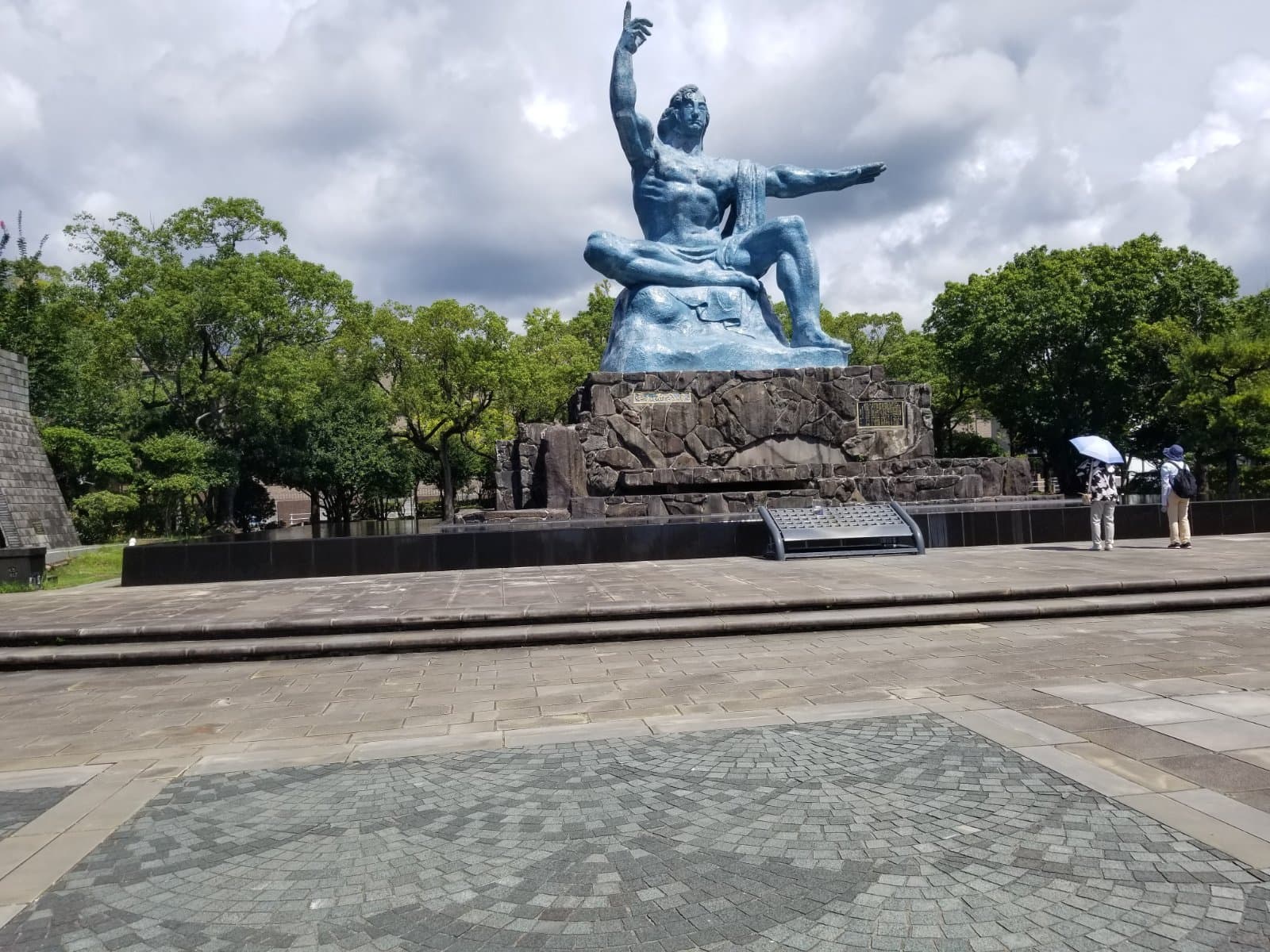
On August 9, 1945, the city was struck by the second atomic bomb. The Hypocenter Park, the Atomic Bomb Museum and the Peace Park tell that story with quiet dignity, and many travelers say it is the visit that stayed with them most. Then the city lifts you back up: trams that cost the same whatever the distance, steep lanes lined with old steps, castella sponge cake and champon noodles, and at dusk the ropeway up Mount Inasa for one of the most famous night views in Japan.
How it works
Pick a guide whose page speaks to you and send them a message from Ikitorii. They answer in their own words, usually within a day, and the two of you take it from there. If you are coming off a ship, say so and share your hours in port: a good local will build the day around them. No booking fee, no fixed program and nobody in the middle.