Want to talk to a guide? Create a free account to message them directly through Ikitorii.
Create an accountPrivate local guides in Okinawa
Okinawa was a kingdom of its own for more than four centuries, and it still feels like somewhere else: its own language, its own food, its own music, and a sea that runs through every shade of blue. These are the locals who live there.
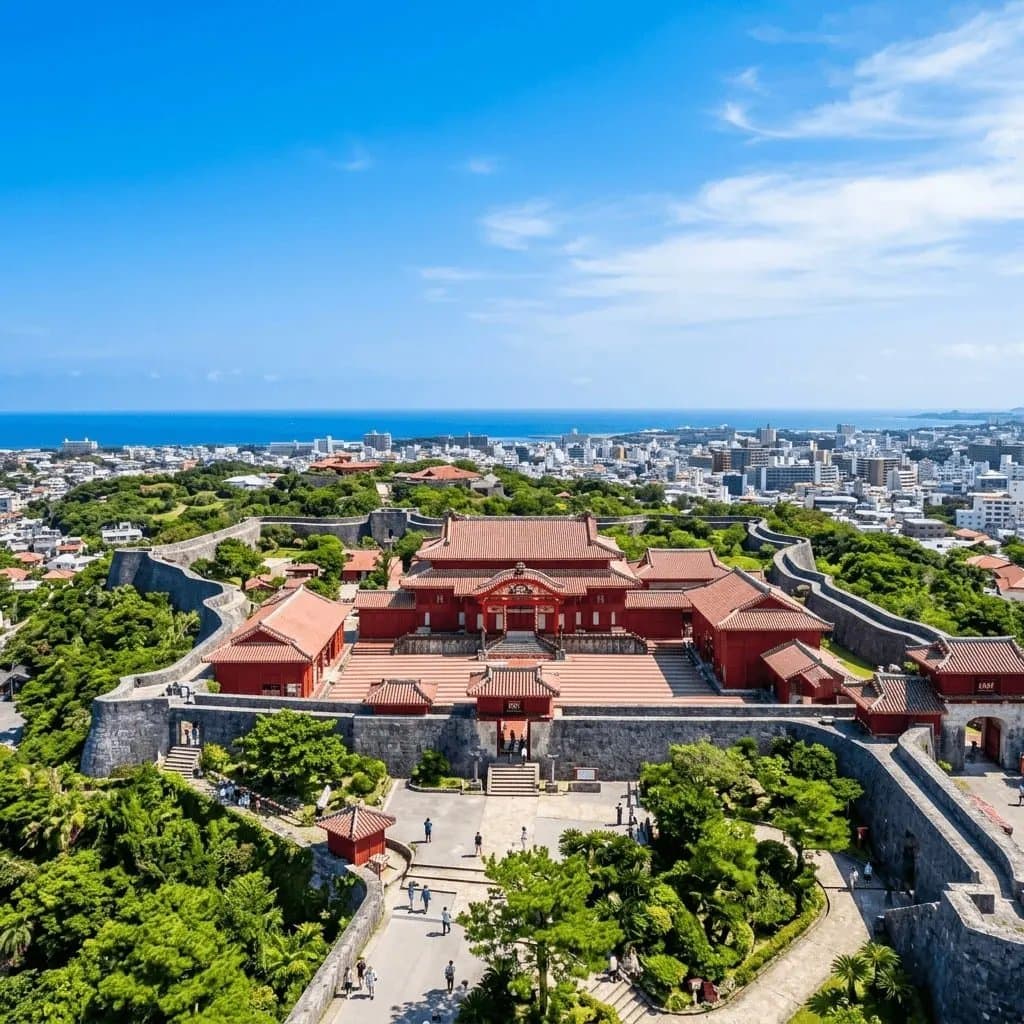
Most visitors land in Naha, spend a day on Kokusai-dori, drive up to the aquarium and fly home thinking they have seen Okinawa. They have seen its postcard. The Ryukyu Kingdom traded with China, Korea and Southeast Asia long before it became part of Japan in 1879, and that history is everywhere once someone points at it: in the stone walls of Shuri, in the potters' lane of Tsuboya, in the shisa lions guarding every roof, in the sanshin drifting out of an open window. Then there is the food, which owes as much to the islands as to the mainland: goya champuru, Okinawa soba, rafute, sea grapes, and awamori aged in clay jars, sometimes for decades.
Every guide on this page is a real person with their own page, their own photos and their own idea of a good day out. You write to them directly, agree the date, the meeting point and the price between you, and pay them without anything passing through us. Ikitorii takes no commission on the time you spend together. Okinawa is also a gateway: the Kerama Islands are a short ferry ride from Naha, and Miyako, Ishigaki and Iriomote a short flight away, so the first message often turns into a question about which island fits your trip.

Arnaud — Breizh & Ryukyu


The Ryukyu Kingdom, still in plain sight
Shuri was the royal capital, and the stone walls, gates and gardens around the castle tell the story of a small kingdom that lived by trade and diplomacy. A short walk away, Tsuboya has been making pottery for more than three hundred years, and some workshops still fire their kilns the old way. The people who live here know which doors open, which stories belong to which place, and how the war that devastated the south of the island still shapes the way it is talked about today.
Yanbaru, the north, and the islands beyond
The north of the main island is another Okinawa: the subtropical forest of Yanbaru, a UNESCO World Heritage site since 2021, with rivers, waterfalls and birds found nowhere else, all the way up to the cliffs of Cape Hedo. Further out, the Kerama Islands have some of the clearest water in Japan, and the Yaeyama Islands sit closer to Taiwan than to Tokyo. Tell them how you like to spend a day, on foot, at a table or in the water, and let them draw the route.
How it works
Pick a guide whose page speaks to you and send them a message from Ikitorii. They answer in their own words, usually within a day, and the two of you take it from there. No booking fee, no fixed programme and nobody in the middle: just a local who wants to show you the Okinawa they live in.